Saturday, April 30, 2011

Am I Depressed? Top 13 Symptoms of Depression

This Page has moved! You can find the Full article, and many more on the my website, Toronto Holistic Therapy Information

Here is your article:



I often write about treatments of depression, anxiety, etc....but how do you even know it when you or your loved ones are depressed?

What follows are the somewhat ominously numbered thirteen top symptoms of depression, If you or a loved one is experiencing one or more of the below symptoms, then you may consider getting some help.

  1. Loss of Appetite: Going the whole day without eating for a few days in a row or more than one day in a week.
  2. Overeating: Eating unhealthy food whenever you are feeling anxious, upset, angry or after something bad happens.
  3. Sleep Problems: Sleeping too much or too little. If you are sleeping more than 12 hour or less than 2 hours per day. You can alternate between these symptoms.
  4. Lack of Energy: Running out of energy very early in the day. Feeling lethargic.
  5. Low Self Esteem: Feeling that you are not worthwhile; believing that you are inferior physically or intellectually.
  6. Loss of Motivation: Uncaring. Not motivated to take a shower or make a meal or care for your family.
  7. Poor Concentration. Focusing on the present is difficult as anxious thoughts are invading your mind.
  8. Feeling Hopeless: Writing off all possibilities and opportunities as doomed from the start.
  9. Lack of Sex Drive: Disinterested in all intimate contact, especially sex.
  10. Social Isolation: Pushing others away or feeling uncomfortable around people. It may feel that you need others but that you have no one you can turn to.
  11. Irrational/Emotional Outbursts: Finding yourself getting angry or upset often. If this is happening regularly, then some of it is irrational or misdirected.
  12. Disregarding Responsibility: Abandoning anything that causes stress, including people, your job, social responsibilities, etc...
  13. Substance Abuse: Repetitive or overuse of alcohol, marijuana, prescription drugs, etc. Particularly as a way to cope.
In the past there was a stigma attached to depression and therapy. Now it's very common to seek help before it becomes more serious.


Sunday, April 24, 2011

Ayurveda: 23 ways to Start Feeling Better Today

This Page has moved! You can find the Full article, and many more on the my website, Toronto Holistic Therapy Information

Here is your article:

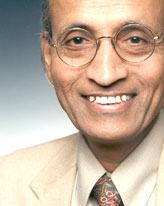
Dr. Vasant Lad, expert in Ayurvedic healing

Have you noticed how often our daily habits go against nature? How often do you eat food that is out of season? How many unusual chemicals do we put on our skin or hair or in our food? The problem in our society is that it's very difficult to know the right authority to trust as you try to find a balanced lifestyle.

Take for instance, the Atkins Diet. Its very popular, but really this has only been around a half dozen years or so. Ayurveda, by contrast has been practiced for over three thousand years, making it one of the oldest practices in medicine still in use today.

Ayurveda is centered on helping you live a balanced life through eliminating the toxins you take in (or allow your body to produce). This is done by changing your diet and lifestyle. For example: your diet should be changing through the year. Humans evolved eating only what grew naturally, agriculture is a relatively recent development. So our bodies are designed to eat the foods of the current season.

Among the top Ayurvedic therapy experts in the West is Dr. Vasant Lad, Chairman of the Ayurvedic Institute in Albequerque, New Mexico. Prior to his work in New Mexico, he served as Medical Director of the Ayurveda Hospital in Pune, India. He also has trained in Western Medicine as the two are not in conflict. I recently attended one of his presentations at the Metro Convention Centre here in Toronto.

His talk was simple, basic and to the point. His message was that we can eat the best organic food, but if we do not have harmony in our relationships and lifestyle, only conflict and unresolved emotions, then our health cannot be good.

Here are some tips he shared with us:

  1. Change your food according to the season.
  2. Have a daily routine.
  3. Have spiritual awareness.
  4. Wake up before the sun rises, you will be fresh and alert and have less depression.
  5. Clean your aura, in the morning, by moving your palms over your face, head and your entire body, with loving deep breaths. You will fall in love with yourself.
  6. Pray for a fulfilling and beautiful day.
  7. Kiss your reflection in the mirror and say "You are beautiful the way you are".
  8. DON'T use fluoride toothpaste and DO scrape your tongue from back to front to remove dead bacteria.
  9. Drink a glass of lukewarm water to wash away toxins. then do the So-Ham meditation. mouth the sound "So" on the inhalation, "Ham" on the exhalation, with your feet facing away from the door.
  10. Focus your attention on your third eye (space between your eyebrows) and visualize light in that spot.
  11. Massage your body with warm sesame oil (or coconut/sunflower oil ) in the opposite direction of your hair.
  12. Take a shower with a small amount of soap, dry with a clean towel and wear clean clothes.
  13. Drink your food and chew your water.
  14. Go for walks after dinner.
  15. Don't watch t.v. while eating food.
  16. Chew fennel or coriander seeds after roasting them.
  17. Always share your food and don't eat in the dark.
  18. Burn incense and candles.
  19. Wash your eyes twice per week, lubricate nostrils daily and at bedtime put warm oil in your ears.
  20. Dinner should be between 6 and 7 pm, not after sunset.
  21. Rub your feet with brahmini or brungaraj oil. This will send you to sleep easily.
  22. Go to bed between 9.30pm and 10.
  23. Don't eat yogurt on a cloudy, rainy day as it will clog your arteries and increase mucus.

These are simple yet effective tips for leading a healthier lifestyle.

What impresses me most about this way of healing is that the methods are so simple, pure and sincere. It bring us back to nature and makes us feel grounded. Love yourself and everyone around you, have positive loving relationships. If you make a commitment to take care of yourself in a loving way, you will be on the road to healing yourself.


Ismat Nathani, Founder of the Centre for Ayurveda and Indian Systems of Healing, worked with Dr. Lad to provide further information about Auyrvedic treatments.

Friday, April 15, 2011

What is Focusing?

This Page has moved! You can find the Full article, and many more on the my website, Toronto Holistic Therapy Information

Here is your article:

You probably think that it means to concentrate on something, like: I need to focus on a project, my future, etc.....However, Focusing in the psychotherapeutic sense means something different; it is a guided thought exercise which is designed to help you to transform an emotional block. It is not hypnosis, your eyes are closed but you remain fully aware at all times.

When dealing with our conscious minds, there are roadblocks we put up (subconsciously) in order not to feel pain. And yet, to transform the pain during therapy we do need to briefly touch upon the pain. There is no magic wand that wipes away the pain. But Focusing offers an alternative to the sometimes uncomfortable discussions that many people associate with psychotherapy.

Unlike traditional therapy, Focusing allows you to remain in a safe state of mind while the therapist guides you to a place where you can deal with your emotions and gain peace of mind. One aspect that many people find comforting with this exercise is that much of the conversation is optional, leaving them able to respond and react to their own experience of the therapy.

Often when you come in to therapy it can be easy and natural to become defensive; this sort of an exercise will take the burden of communication away, and allow you to orient yourself on your emotions. By getting closer to the issue, you are able to see the it from a distance and ask yourself "What is it all about?" and find an answer.

During the entire session I will coach the client to pay attention to their feelings. Through gently asking specific questions I bring the client to a point where they feel ready to deal with the pain; whether it's through seeing things from a different angle, having a eureka moment about themselves or being able to express their deepest emotions to someone.

As each person is unique, I deal with each person in a different way. Prior to directing their attention within themselves, I guide the client to their peaceful place with their eyes closed so that the client can get relaxed and more in tune with the emotions held in their body. In holistic therapy, the connection between body and mind is given greater importance.

The session has been successful when you feel a shift in your emotions, and experience a feeling of release. Most of the time there is no need for much talk afterwards and the you can go home and let it all sink in and celebrate your newfound peace.

It always amazes me how powerful this method can be. Focusing helps the client to go much deeper within themselves than by regular talking. Although talking has it's place, transformation happens when we have our eyes closed and our mind focused with no fear of overcoming the obstacles. The greatest satisfaction arrives when the transformation is complete.

Friday, April 8, 2011

Do You Control Your Thoughts or Do Your Thoughts Control You?

This Page has moved! You can find the Full article, and many more on the my website, Toronto Holistic Therapy Information

Here is your article:


"We can easily forgive a child who is is afraid of the dark, but the real tragedy of life is when adults are afraid of the light." - Plato


Negative thoughts are controlled by your emotions. A quick fix can be to repeat positive affirmations. Sometimes all that's necessary to change your thoughts is practice and repetition of healthier thinking.

Affirmations work like commands given to a computer. They influence how we perceive ourselves, other people, events and circumstances.

Here is how this works: The repeated words build mental images in the mind and focus us on positive, productive thoughts. Frequent repetitions are like adding drops of water to a bucket, changing our habits over time. The conscious mind, starts the process and then the subconscious mind takes charge. This means that the most frequent thoughts that pass through your mind, ultimately effect your life and your future.

Here are some examples of positive affirmations:

I seek people who love and nurture me
I am centered and balanced
I can change
I value and love myself exactly the way I am


While affirmations are a highly effective tool, for some people reciting affirmations, will not allow them to deal with the root issues and negative emotions. For those people I help them to feel the underlying feelings first and then transform into peaceful feelings through a process called Focusing. Next week I will go into detail on this exercise. In the meantime, you can read more about it on my website here.


Sunday, April 3, 2011

How Can I be Happy? What is Happiness?


This Page has moved! You can find the Full article, and many more on the my website, Toronto Holistic Therapy Information

Here is your article:


Why is happiness so difficult to hold on to? It seems like we are insatiable, anything that pleases us will eventually become stale. This can be a force for good, it pushes us to do more than rest on our laurels, to go out and succeed in life. There is a huge rush that comes with pursuing feelings of lust, ambition, hate, anger and jealousy; but with it life can become a series of conflicts and problems. It can be easy to lose heart.

You may think: "If have a house and wife/husband, I’ll be happy", only to discover that once you’ve achieved these, you are still dissatisfied after a while, feeling an emptiness within. A void threatening to swallow up everything around you. Lots of people try to fill this void up with their bad habits. Kirstie Alley fills it with food, Charlie Sheen tries to fill it with drugs.

When this desperate discomfort or dissatisfaction spills over into negative behavior, its usually the result of anxiety over a central problem that you are ignoring or completely unaware of.

Finding peace is not just having a few hours or days of tranquility by yourself, but finding a higher state of mind where you are in complete harmony with yourself. The secret here is to find and deal with the root of your real problems. If you have negative body issues for example, then binging on comfort foods will lead you into a vicious cycle, but by actively working to resolve those issues with your body image, you can learn to move past any negative behavior and adopt a healthier lifestyle.

Once you've developed better habits, those troubles that drove you to negative choices will no longer bother you. This can take time and commitment, but the end result is a longer, healthier, happier life.

True happiness is a state characterized by stability and contentedness. Learn to be comfortable with yourself and the world around you, accept that some things in life are beyond your control and find joy in things just as they are.

Friday, March 25, 2011

Do We Make Our Destiny?


This Page has moved! You can find the Full article, and many more on the my website, Toronto Holistic Therapy Information

Here is your article:


Destiny is the past creating the present. You might say to yourself: “I'm just destined to be overweight/unhappy/victimized/destitute/alone forever”, but these are actually the results of life choices you've made. It's never too late to make a change.

Repeating poor actions without considering the consequences causes your body to develop unhealthy habits. However, you are not destined to be anything except what you’ve made of yourself through past and present actions. Many of these behaviors are reactions to past trauma and/or coping habits that don't address the issue.

Each morning when you wake up you make a plan that you never follow through on. Somehow you get overwhelmed, or at the end of the race, you find that you never really wanted the prize in the first place. It's time to breathe, take a look at your life, and see that you're on a course for self destruction. If you have stumbled and fallen you can always get up, dust yourself off and continue on a different path. No matter what your present state is, you can change through self control, discipline and altering the way you think.

There are many examples of great men and women who have overcome their personal demons. In his youth Mahatma Ghandi had tremendous anger management problems, prior to his renown as a pacifist, he was actually a very violent man. Terry Fox overcame amputation and mounting health concerns to run his marathon of hope. Usually those who achieve great things also suffer great failures, but they refuse to be trampled by them. You don't have to achieve your country's independence or run across the country on one leg; small steps can turn your life around.

And if you're still having trouble changing your thoughts, check back next week.

Friday, March 18, 2011

Are We The Clothes We Wear?


This Page has moved! You can find the Full article, and many more on the my website, Toronto Holistic Therapy Information

Here is your article:


People judge us by our outward appearance, but in the long run the way we conduct ourselves is much more important. Once you develop your mind and cultivate appealing inner virtues, clothes become less important.

Mahatma Ghandi proved that the clothes do not always “make the man”. He wore only a loincloth as a way to identify himself with the humble masses of India.

He once arrived dressed that way at a party thrown by an English governor. The servants turned him away at the door, so he went home and sent a package by courier to the Governor. What was in the package? A suit. When the Governor called and asked the meaning of the package, Ghandi replied: “I was invited to your party, but I was not allowed entrance because of my dress, therefore I have sent you my suit instead.” Even during his visit to London, Ghandi went to visit the Queen of England wearing only a loincloth.

Of course, I don't personally recommended that you dress this way. Ghandi had a mission to fulfill and this was part of his role (and his rhetoric).

Clothing in western society, for women especially, is geared towards sexuality. The media and fashion industry makes millions of dollars by convincing us that clothing not only is an outward expression of who you are and what creed you belong to, but also that you need the right clothing to get what you want in life. While this may even be true to some extent, there is definitely too much emphasis placed on our outward appearance.

Take for example, the argument in favour of the burka. While the popular Western sentiment may see this as a symbol of sexual oppression within certain cultures, many women from those cultures will express that wearing a burka frees them from the judgement and sexuality that the rest of the world attaches to clothing and physical beauty.

The point is: while your outward appearance is important, it is far from being the centre of the universe. To give the body too little or too much focus can leave you insecure and unbalanced. What is most important is your mind and behavior. That's what people respond to.